
Leadership Development Program
Build Leadership Development Programs for Your Top Priorities
Whether you need to strengthen one critical level of leaders or scale across the enterprise, leadership development programs should align to your most important business priorities.
Different leaders face different challenges—and need different development experiences to succeed. Frontline leaders, mid-level managers, and senior executives each require personalized approaches that reflect their roles, context, and goals.
We help organizations build tailored leadership development experiences that strengthen pipelines, accelerate readiness, and drive measurable impact.
By The Numbers
Our Leadership Development Programs Drive Results
DDI Impact Evaluation data shows our clients see significant impact from their leadership development programs.
94 Valuable Investment
94% said the program was a valuable investment of resources.
95 Focused Development
95% said it helped them focus the development of their leaders.
91 Aligned Programs
91% aligned the program with other talent management processes in their organization.
Leadership Development Programs Reimagined
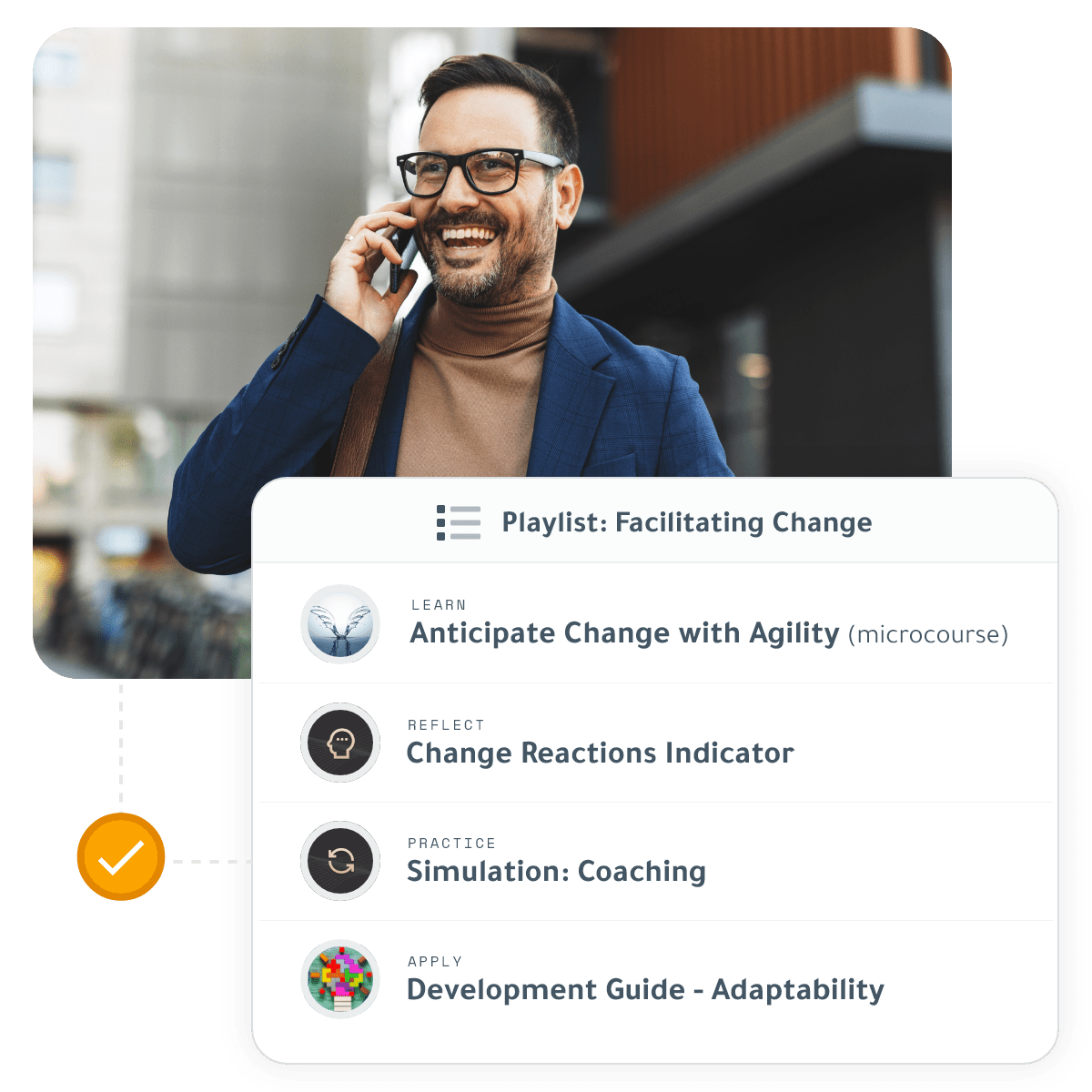
Effective leadership development goes beyond completing a series of learning tasks. It involves transforming how leaders interact with others. One-and-done learning events don’t often lead to true behavior change. We design leadership experiences that are:
- Relevant: Focused on real challenges, using assessment insights to target development where it counts.
- Personalized: Tailored to each leader’s role, level, and business context for more meaningful growth.
- Immersive: Built around practice, peer connection, and learning by doing—not passive training.
- Human: Strengthens the human skills leaders need in a rapidly changing, AI-focused workplace.
- Trusted: Grounded in leadership science, proven methods, and measurable outcomes.
Explore Programs
Which leadership development program do you need most?






Emerging Leader Program
Pave the way for next-generation leadership with a program designed for emerging leaders. Give these employees everything they need to prepare for their career path ahead and build a strong bench to tackle the challenges of the future.
It’s a different way to think about interactions and purpose at work. An emerging leader program allows this group to practice leading projects in their informal leadership roles before they take on direct reports.
With DDI, you can help these high performers evolve from individual contributors to future managers.
Frontline Leader Program
Frontline leaders directly manage about 80% of the workforce. As a result, they have the biggest impact on key metrics like hiring, retention, performance, productivity, and safety. Yet many of these leaders lack the core skills needed for success.
We help organizations build strong frontline leadership foundations through development experiences designed for both first-time and experienced frontline leaders. The result is more consistent leadership behaviors and better-equipped leaders across teams.


Middle Manager Program
Middle managers are invaluable—the critical link between strategy and execution—yet many organizations underinvest in their development. Success at the frontline doesn’t automatically prepare leaders for the complexity and pressure at the mid-level.
In these roles, even strong leaders can struggle to manage their impact under stress, affecting team performance and culture. Generic training isn’t enough.
DDI’s middle manager programs provide insights on leadership personality and targeted development to help leaders expand their influence, navigate complexity, and lead more effectively.
High-Potential Program
High-potential leaders are your organization’s future. This small group holds the full potential of your company in their hands. And high potentials want to grow fast. But rising through the ranks at full speed means that more development must make up for less experience.
Above all else, training for these leaders must be highly personalized and deeply relevant to help them make faster and smarter moves.


Executive Development Program
Executive success requires more than experience alone. Even the most capable leaders need support to navigate the complexity, visibility, and pressure at the executive level.
Too often, organizations assume senior leaders will figure it out on their own—despite the costly risk of failed transitions and missed impact.
Our executive development programs help leaders adapt faster, expand influence, and lead with confidence in high-stakes roles.

2.7X
More Likely to Be Top Financial Performer
Companies offering effective leadership development at all levels are 2.7X more likely to be a top financial performer in their industry.
Global Leadership Forecast 2023
Why It Pays to Scale
Unlock Multilevel Growth
Leadership development has greater impact when applied across multiple levels, creating a more consistent leadership culture. Shared expectations help leaders reinforce the behaviors that move the organization forward.
Many organizations start with one leadership level—but the strongest strategies are built to scale. DDI makes it easy to grow development across every stage of leadership, from first-time managers to future executives, creating consistency across the leadership pipeline.
Have a Question?
Frequently Asked Questions: Leadership Development Programs
-
What types of leadership development programs does DDI offer?

DDI offers comprehensive development programs for emerging leaders, frontline leaders, mid-level managers, high potentials, and executives—all accessible through our Leadership Development Subscription. Our programs promote a consistent leadership culture across your organization, enabling shared expectations and accountability for behaviors that drive success. Whether you're starting with one leadership level or implementing development across your entire pipeline, we partner with you to create programs that grow with your needs.
-
How does a Leadership Development Subscription work?
A DDI Leadership Development Subscription provides comprehensive, flexible access to our complete suite of leadership development tools and content—including personalized assessments, in-person and virtual courses, microlearning tools, and practice resources. The subscription model allows you to scale development across your organization while being supported by a DDI Strategic Learning Team, who partners with you to design, implement, and measure program success. You get everything needed to create lasting leadership impact, all in one place with measurable ROI.
-
How do you measure the success of your leadership development programs?
DDI measures leadership development success across all levels of the Kirkpatrick Model, tracking everything from participant reactions and learning to behavioral change and business results. Our Leadership Development Subscription includes comprehensive measurement tools and processes, making it easy to demonstrate the impact of your leadership development investment.
-
Can leadership development programs be customized for my organization?
DDI's Leadership Development Subscription provides access to an extensive content library that can be tailored to create learning journeys specific to your organization's needs. Your dedicated DDI Strategic Learning Team partners with you to curate content and design leadership development programs that align with your unique organizational challenges. With an Enterprise Subscription, additional configuration options are available based on your requirements.